
Proud Voices: Maeve Delargy
To mark Pride 2022, the Law Society is celebrating LGBT+ members by sharing their stories and perspectives.
Here, Council member Maeve Delargy discusses the legal barriers still facing same-sex parents.
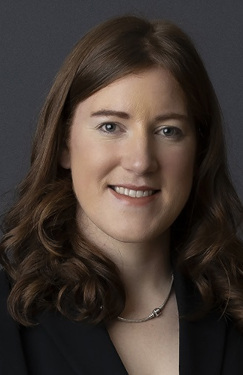 My name is Maeve Delargy and I am a lesbian lawyer. Sometimes it feels like there aren’t many of us around! But we are here and we are enjoying fulfilling and successful careers in law.
We are as varied a group as any other in society. Some of us wear suits, some wear dresses. Some have long hair, some have short. Some are single, some are in relationships. Some are married, some are in civil partnerships. Some have children, some do not. I am in the ‘married with children’ camp – the most conventional lesbian you can imagine! I have two children but I am only the legal parent of one. That is because my wife gave birth to our older daughter and there is no mechanism to allow me to have a legally recognised relationship with her.
Having met in school and dated for 11 years, we got married in 2019. Following marriage equality, most people presume this means our family is protected in the same way as any other under the constitution. Unfortunately, that is not the case. Since May 2020 the children of some same sex female couples can now have legally recognised relationships with both their parents. However, as per Dr Lydia Bracken’s opening statement to the Joint Oireachtas Committee on International Surrogacy “In research that I conducted with LGBT Ireland in 2021, 53% of the LGBTQI+ parent families captured by the research were not fully recognised under Irish law, which means that both parents were not recognised as legal parents. Similarly, in more than half of the families the two parents were not recognised as joint legal guardians of their children.” Because of the way we conceived our children my family is part of that 53%.
Apart from the hurt it causes, not being a legally recognised parent has practical ramifications. I cannot bring my daughter to get her vaccines or consent to any medical procedures. I cannot sign any forms for crèche or school. And, down the line, there will be implications for any inheritance I, or any members of my extended family, would like to give her. It's not nice to think that Ireland doesn’t see me as a parent. It also causes a lot of worry as I imagine the various scenarios which might arise, including what would happen if my wife died.
Once my daughter turns two (a long time in the life of a child!) I will be able to make an application to be her guardian. When a court date is eventually assigned, I know it will be a day of mixed emotions. While I will be relieved to finally be able to make decisions on behalf of my child it will feel strange to be her legal guardian when I am in fact her parent. Guardianship is not parentage by another name. For one thing, it only lasts until she turns 18, at which point I will be a legal stranger to her again. Guardianship is also different to parentage in that there are no automatic inheritance rights for the child of a guardian and a child cannot claim citizenship through their guardian.
There is an opportunity to change the law so that all children, no matter how they were conceived, have a legally recognised relationship with both their parents. This opportunity comes by way of the Assisted Human Reproduction Bill 2022 which is currently before Dáil Éireann at third stage. The bill is being introduced to regulate assisted human reproduction (AHR) treatments including surrogacy. This bill could be used to amend the Children and Family Relationships Act 2015 which is the existing legislation on donor-assisted human reproduction.
I am a volunteer with Equality for Children, an NGO which is fighting for equal rights for children of LGBTQ+ families in Ireland. Equality for Children is a member of the AHR Coalition. This Coalition was formed in 2020 by a number of organisations representing and supporting people who require AHR in order to have a child. If you want to help protect the rights of all children, please follow Equality for Children on social media to get updates about the campaign, ask your TD to put forward the necessary amendments to the AHR Bill and talk to family, friends and colleagues about this issue.
While we are waiting for the law to catch up with the reality of how families are formed in Ireland you can ensure that your colleagues and employees feel supported in their journeys by creating inclusive policies for those going through fertility treatment, those going on leave and those returning to work.
Maeve is a Law Society Council member and Junior Vice-President of the Younger Members Committee. She is a Senior Associate Philip Lee’s Planning and Environmental team. The views expressed above are the author's own.