Instructions to expert witnesses key, event hears
Former Court of Appeal judge Michael Peart has told a conference that a judge will notice when an expert witness is not fully aware of his or her obligations to the court.
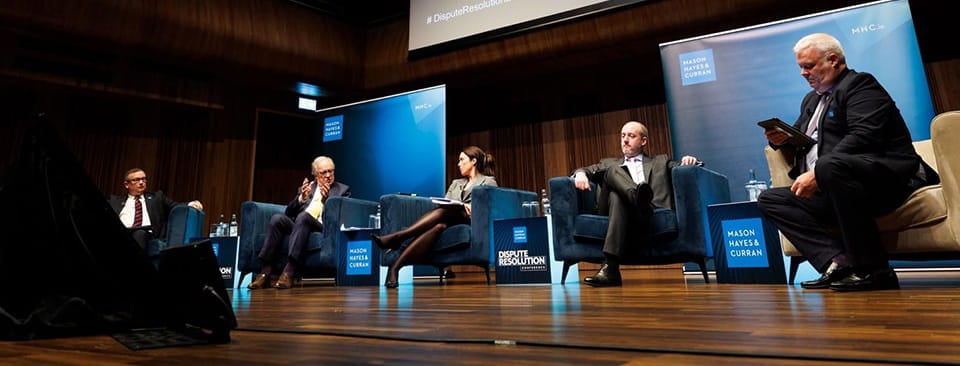
He was speaking during a panel discussion on expert witnesses at Mason Hayes & Curran’s annual dispute-resolution conference in Dublin (30 September).
MHC dispute-resolution partner Gearóid Carey said that the biggest issue with expert evidence was the extent to which experts could comply with their obligations to the court, particularly in the context of presenting an independent view to the court based on their own output, given the likelihood that they would use AI.
Barrister Ross Aylward told the event that experts, and the practitioners who instructed them, must understand that their main function was to assist the court. describing the expert's function as "auxiliary, not adjudicative".
Not a ‘mouthpiece’
Shelley Horan SC added that the expert witness should not be a "mouthpiece" for any party and should disclose potential conflicts of interest early in the process.
The panel agreed that expert witnesses could change their view on an issue but must disclose that they had done so.
Aylward pointed out, however, that this could leave an expert witness open to being undermined during cross-examination, unless the witness had qualified his or her opinion, where appropriate.
Former solicitor Peart, now a mediator and arbitrator, told the event that there was a difference between being an expert in a particular discipline and an expert witness, highlighting the importance of training and instructions from a solicitor in the case.
Peart said the expert's obligations to the court applied not just to his or her evidence, but also to the report that preceded the giving of evidence.
Competing opinions
Peart stressed that there could be two competing and valid views expressed by expert witnesses during a case, adding that the judge's job in a civil case was to rule based on the balance of probability, not to decide which expert was right or wrong.
Peart added that a judge had discretion on how much weight to attach to expert evidence and did not have to accept uncontested evidence from an expert witness.
For expert witnesses, the former Court of Appeal judge stressed the importance of brevity.
"Experts should remember that the judge is not an expert," he stated, adding that such witnesses should be able to communicate their views in clear language.
'Hot tubbing'
The panel, chaired by MHC partner Gerard Kelly SC, broadly agreed that joint expert meetings or reports, known as 'hot tubbing', could be useful to save time and narrow down the key issues in dispute.
Aylward told the event that such joint meetings were "never a waste of time", adding that they could give solicitors an insight into the thinking of the expert on the opposing side, as well as testing the position of one’s own expert.
Michael Peart said that, if an expert witness conceded or accepted some validity in the opposing view, it could aid credibility, by enabling the judge to see the expert's objectivity and lack of partiality.
Asked about pre-screening of expert witnesses, Carey said that there was an obligation on practitioners to ensure that such a witness was an expert, adding that it was "critical" that they could comply with their obligations to the court.
Disclosure
Horan described a solicitor's briefing letter to an expert witness as being of "paramount importance" to remind them of their obligations to the court.
She explained that experts must disclose their qualifications and connections with any of the parties, as well as cite any sources referred to in their reports.
Aylward added that, while practitioners could ask expert witnesses to address the key issues in a case, they could not look to influence the substance of their reports in any way, nor ask an expert to take anything out of a report.
He added that the briefing letter to the expert could be disclosed in court.