‘Follow the money’, scam victims urged
A survey has found that more than four in five legal and business professionals believe that Ireland should introduce mandatory refunds for victims of payment scams.
The finding came from a poll of over 100 attendees at Mason Hayes & Curran’s annual dispute-resolution conference in Dublin (30 September).
Respondents were asked about APP (authorised push payment) fraud, where people are deceived into sending money to criminals. Such fraud reached almost €75 million in 2025, according to Central Bank figures published in September.
Britain introduced mandatory reimbursement for eligible APP fraud claims in October 2024, covering transfers through specified domestic payment systems.
Britain ‘ahead on prevention’
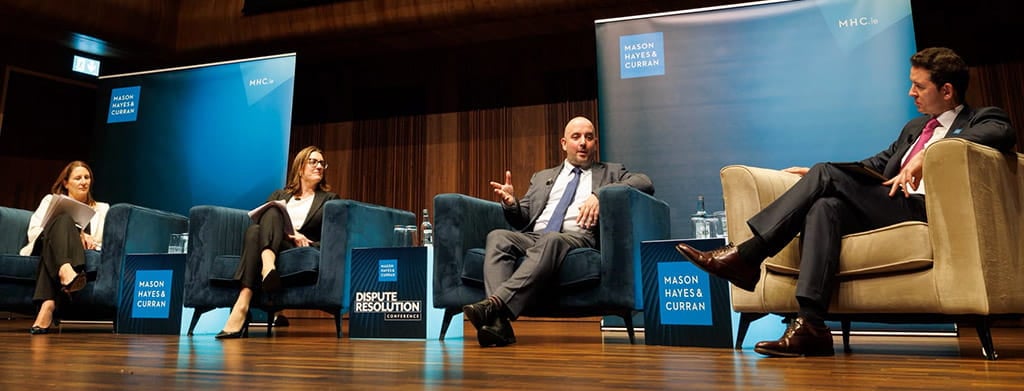
The conference included a panel discussion on the issue, during which Niamh Davenport (Banking and Payments Federation Ireland) said that, while her organisation was not against refunds, they did not solve the problem.
She added that there was a risk that consumers could become “more lax” if they knew they would be refunded in such cases.
Davenport said that Britain was further ahead on measures to prevent payment fraud, such as a cross-sector fraud-sharing database.
Irish banks cannot currently share information on suspected criminal and fraudulent activity, as there is no legal basis to do so.
Barrister Elizabeth Corcoran BL told the conference that there had not so far been any case in the Irish courts to determine whether a bank should refund a customer who had been the victim of APP fraud.
“Any real future risk of obligations of reimbursement from APP fraud are far more likely to come from financial regulation than from any massive expansion of the common-law doctrine in the courts,” she stated.
Quincecare duty
She discussed English case law on the issue – including Barclays Bank plc v Quincecare Ltd, in which the court found that a bank should not execute an order if there were reasonable grounds for believing that the order was an attempt to misappropriate funds.
Corcoran warned, however, that examples of where the Quincecare duty had been successfully pleaded were rare.
She added that it could not assist APP victims, as it did not apply in cases where a customer directly and personally instructed a bank to make a payment – even if the customer had been deceived or tricked by a fraudster into in making that instruction.
The barrister also told the event that it could be more challenging to recover assets from the bank receiving the money, as that bank did not owe a duty of care.
‘Follow the money’
She advised APP fraud victims to “follow the money”, but warned that this required a very swift response, as well as help from law enforcement, banks, and courts.
Remedies include freezing orders, disclosure orders, and Mareva orders, which freeze assets.
Gerard Kelly SC (partner and co-head of dispute resolution at MHC) said that people deceived into transferring money could face a difficult legal battle to recover it.
He said that a reimbursement scheme would give eligible victims a more direct route to getting their money back, but warned that any Irish scheme would need “careful consideration” of who qualified and how the cost was shared.