Concerns about 20% cut to criminal legal aid
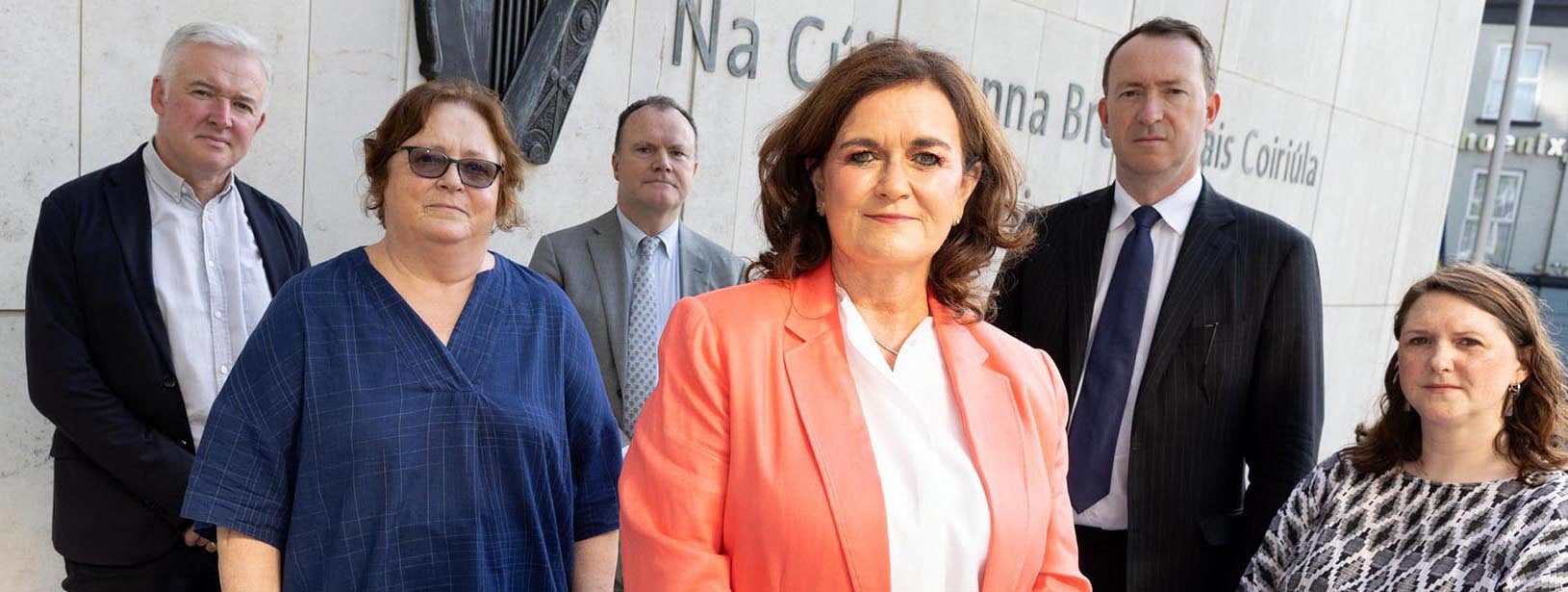
Several national legal, human-rights, and civil-society organisations will gather today (26 June) at the Criminal Courts of Justice in Dublin to voice their shared concerns about planned changes to Ireland's criminal legal-aid scheme and the potential consequences for access to justice.
The groups and bodies include the Law Society, the Bar of Ireland, the Irish Human Rights and Equality Commission (IHREC), the Irish Council for Civil Liberties (ICCL), the Irish Penal Reform Trust (IPRT), and the Free Legal Advice Centres (FLAC).
The organisations are calling on the Department of Justice to reconsider elements of the proposed reforms before their planned introduction on 1 July, warning that any changes to the criminal legal-aid system must strengthen, rather than weaken, the ability of individuals to access fair representation and a fair trial.
Barriers
The collective gathering comes amid growing concern across the criminal-justice sector that the proposed move to a flat-fee payment model for District Court criminal legal aid cases could create barriers to representation.
President of Law Society Rosemarie Loftus said: “It is deeply alarming that the Government is proposing a 20% cut to criminal legal aid while simultaneously seeking to impose a model that has demonstrably failed in family law.
“This proposal is being advanced on the basis of anecdote and hearsay – an approach that is an insult to the legal profession and to the public it is meant to serve.”
Major policy changes of this magnitude must be grounded in rigorous analysis and systematic evidence, not conjecture, the president said.
“While reform would be welcome, it should be evidence-based, fair, and workable,” the Law Society President continued.
“The DPP has already sounded the alarm about a shortage of criminal lawyers across parts of the country.
“The model proposed by the Department of Justice would render criminal legal-aid practice financially unsustainable for many solicitors, triggering an exodus from the scheme and leaving the most vulnerable in our society without access to legal representation. This is not reform – it is a cap on justice.”
Effective representation
Seán Guerin SC (chair of Bar Council) said: "Every person who comes before our courts is entitled to a fair hearing and effective legal representation. The existing criminal legal-aid system enables this to happen in a way that is fair, economic, and efficient and provides good value by international standards.
“Any reform must protect the integrity of the criminal-justice system and ensure that legal professionals can continue to provide independent and effective representation."
Joe O'Brien, executive director of the Irish Council for Civil Liberties, said: "Legal aid is the cornerstone of our criminal-justice system, underpinning people's access to justice and right to a proper defence and a fair trial.
“Many people who avail of criminal legal aid are particularly vulnerable, due to their experiences of issues like homelessness, addiction or mental health issues.
“The Department of Justice themselves acknowledge this fact. However, the department's proposals fail to account for the realities of criminal legal-aid work and the complex needs of many people in receipt of legal aid.
“ICCL urges the Minister for Justice and the Department to rethink their planned approach and to work with the Law Society and other stakeholders to agree reforms which protect people's rights and access to justice, while also simplifying and streamlining the criminal legal-aid fee structure."
Vulnerable
Saoirse Brady, executive director of the Irish Penal Reform Trust, said: "People who come into contact with the criminal-justice system are often among the most vulnerable in society. Many face poverty, addiction, homelessness, mental health challenges or other forms of disadvantage.
“Access to independent legal advice and representation is essential to protecting their rights and ensuring fair outcomes. Any reform must enhance confidence in the justice system, not erode it."
Eilis Barry of FLAC said: "Access to legal representation in a criminal matter is absolutely essential. It is worrying that the Department of Justice looks set to replicate a model that has patently failed under the civil legal-aid scheme.
“There has been an exodus of private practitioners from the civil legal-aid panels, leaving legal-aid deserts in parts of Dublin and around the country, with people entitled to and desperately in need of legal aid unable to get representation.”