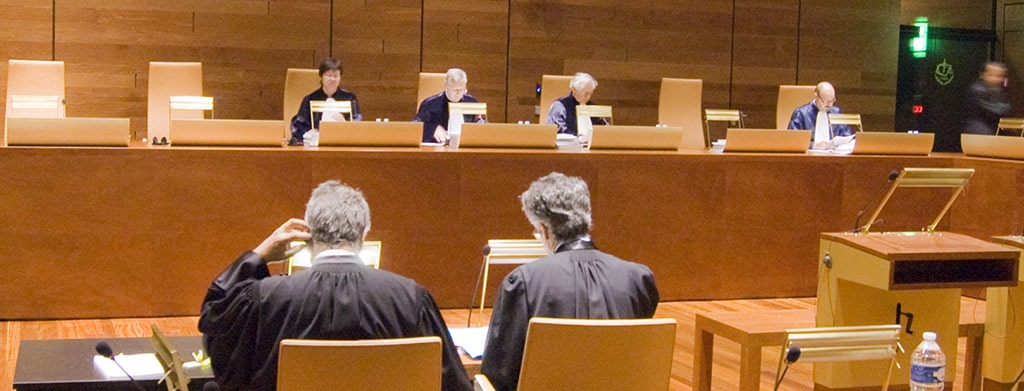
Abramovich’s EU sanctions challenge dismissed
An EU court has upheld measures taken by member states against Russian businessman Roman Abramovich.
He was one of the individuals hit by the EU’s decision to impose sanctions on business people involved in activities or sectors regarded as a substantial source of revenue to the Russian government after the invasion of Ukraine in 2022.
The EU’s lower General Court had previously dismissed a challenge taken by Abramovich, the former owner of Chelsea and the majority shareholder in steel and mining group Evraz, against his inclusion on the list.
EU governments subsequently extended the measures against Abramovich, leading to a fresh challenge to the court.
Working party
In its judgment, however, the court again dismissed Abramovich’s action and upheld the EU’s decision.
The judges rejected the businessman’s argument that the measures had been adopted de facto by an EU Council working party tasked with carrying out preparatory work.
“The fact that those working parties were involved in reviewing the restrictive measures, with the aim of simplifying the taking, by the Council, of a final decision, does not mean that the latter relinquishes its decision-making power or delegates it to one of its preparatory bodies,” the judgment stated.
‘Notoriety’ claim rejected
The court also held that the criteria for applying the measures were “objective, sufficiently precise, and proportionate”.
The judges found that the measures resulted from Abramovich’s capital holdings, rather than, as he argued, a desire to exploit him on account of his public notoriety.
They concluded that the restrictions complied with the conditions laid down under EU law, and in particular the EU’s Charter of Fundamental Rights, since they were “founded on a legislative basis that clearly and precisely defines the scope of those restrictions”.