Universities must ‘preserve critical thinking’ on AI
A conference hosted by law firm RDJ has heard that universities must move beyond AI adoption to lead on the responsible use of the technology.
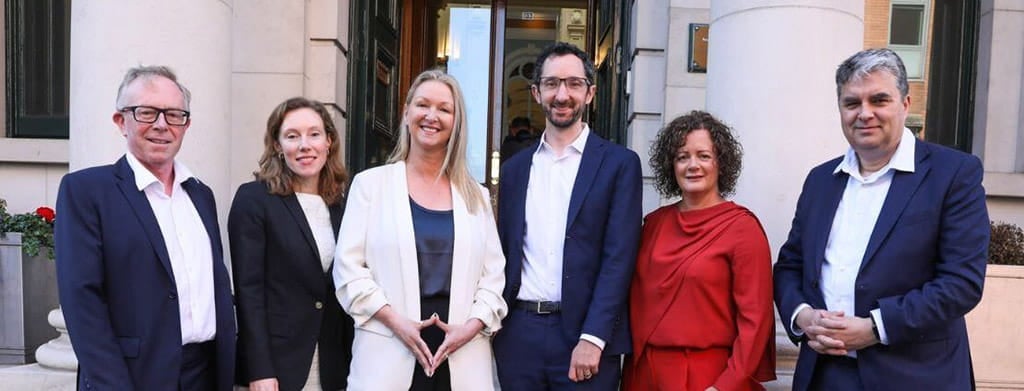
In a keynote address, futurist and programme director at UCD Innovation Academy Dr Lollie Mancey told the firm’s Universities Conference (28 May) that AI was no longer optional.
She told the event that AI was now “a societal and institutional issue, with AI literacy becoming as fundamental as traditional literacy”.
Graduate pathways
Dr Mancey said that there had been rapid adoption of AI without a clear understanding of its appropriate use.
She added that the technology was beginning to disrupt traditional graduate pathways, automating entry-level roles and compressing career progression.
“If entry-level roles disappear, the university pipeline no longer holds,” she stated.
Dr Mancey told the event that we were producing AI users “faster than we are producing AI thinkers”, adding that universities had a critical role not just as adopters of AI, but as interrogators of the technology, ensuring that it was used responsibly and transparently across the institution.
In an environment optimised for speed and output, universities played a vital role in preserving depth, critical thinking, and meaning, the event heard.
Managing student issues
A panel discussion on fair procedures at the conference was told that “robust but adaptable” processes were key to managing student issues and mitigating legal risk.
The panel – Richard Martin (RDJ dispute-resolution partner), Marianne Lonergan (RDJ head of universities), and Joe Jeffers SC – reinforced the importance of process, saying that courts expected internal remedies to be exhausted before challenges were brought.
The event heard that universities should err on the side of greater procedural fairness where uncertainty existed, and that policies should allow for flexibility, rather than rigid processes, in complex cases.
Investigations
RDJ partner David McCarroll and Sarah Daly BL discussed challenges and best practice in conducting investigations in the university sector.
They told the conference that “poor process” was a key factor leading to disputes and WRC findings.
The lawyers said that investigations must be structured, fair, and clearly aligned with policy, adding that a non-adversarial approach encouraged engagement and better outcomes.
They told the event that preliminary reports strengthened process integrity and reduced risk and described clear reasoning and evidence-based findings as “essential” in final reports.
‘Joined-up approach’ on accommodation
RDJ partners Finola McCarthy and Michael Quinlan, along with senior associate Evan Collins, highlighted the growing legal, regulatory, and operational complexity involved in student accommodation.
They discussed the need for funders to have early and comprehensive security over construction documentation, as well as new tenancy rules and Residential Tenancies Board disputes.
The panel concluded that universities must adopt a “joined-up approach” to accommodation across construction, legal, and operational teams.