Legal professional privilege AI risk, solicitors told
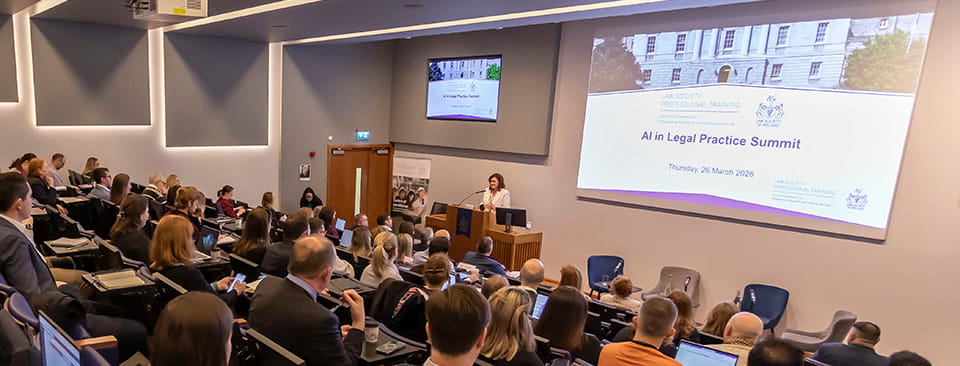
The use of public versions of generative artificial intelligence (GenAI) tools poses serious issues for legal professional privilege and confidentiality, delegates at the Law Society of Ireland’s AI in Legal Practice Summit (26 March) were warned.
Speakers highlighted a ruling in February in the United States District Court for the Southern District of New York, which clearly illustrated the dangers of clients using such tools on their own initiative.
The case in question was United States v Heppner.
Exchanges with Claude
Having been accused of defrauding investors, Bradley Heppner was arrested last November.
FBI agents seized various devices from his home, one of which contained 31 documents of exchanges between Heppner and Claude, a GenAI assistant developed by Anthropic.
Heppner had asked Claude about the defence strategy he could run based on various approaches.
His lawyers, Quinn Emanuel Urquhart and Sullivan, wanted to claim legal professional privilege over those 31 documents.
'No expectation of confidentiality'
The court held that Claude was not a lawyer, and for there to be legal professional privilege, there must be a lawyer at the heart of the relationship.
In his decision, Judge Jed S Rakoff also pointed to the terms and conditions of Anthropic’s privacy policy, which provided that the inputs and outputs would be used for further training of the large language model.
The judge said there could be no expectation of confidentiality in those circumstances.
Even though Heppner brought these searches to Quinn Emanuel Urquhart and Sullivan to discuss his strategy, the court found that at the point at which he did it, he wasn’t directed by them to do that.
There was no nexus back to the lawyers, so no legal professional privilege could be claimed.
Serious issue for Irish practitioners
Attendees at the AI in Legal Practice Summit were told that this type of scenario presented a serious issue for the profession here and that an Irish court was very likely to find the same in such a case.
They were urged to be proactive about informing clients that, if they put material into consumer-level GenAI tools to get a second opinion or for whatever reason relating to their case, they could potentially lose privilege straight away.
Regarding lawyers’ own internal adoption of GenAI, conference participants were reassured that typically, with enterprise-grade models, the terms and conditions would protect confidentiality so they could use it as they wished during their work.
While speakers were generally positive about Claude in particular, and how useful and helpful it was to lawyers, they advised firms to be very careful about what they had signed up to, as there were continuous upgrades and changing terms and conditions.