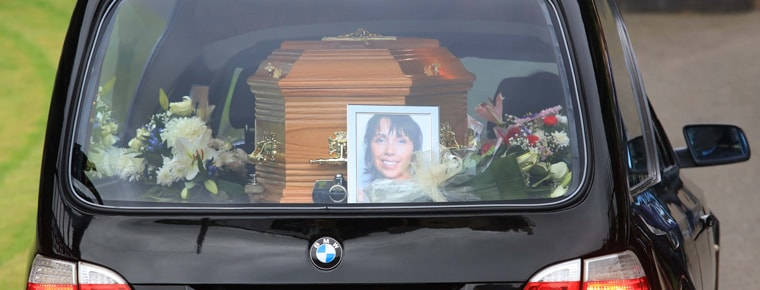
Experts seek input on ‘unimaginable loss’
An expert group is to probe how best to provide support to grieving relatives suffering as a result of familicide.
International best practice in the conduct of domestic homicide reviews is also on the agenda in the review ordered by Justice minister Charlie Flanagan.
Social worker Norah Gibbons will lead the study which will involve consultation with a wide range of stakeholders including state agencies, family members of victims and non-governmental organisations.
Loved ones
Minister Flanagan urged those who have lost loved ones in familicide to contribute.
“It is important that those who have experienced this unimaginable loss engage with this study.
“I took great care in choosing the right person to lead this study. Norah Gibbons not only brings experience and expertise, she also brings great humanity and compassion to this important and sensitive study.”
The first pillar of the study will examine the adequacy and suitability of current policies, protocols, procedures and practices of state services in supporting close family members of those who die in familicides – and make recommendations.
Minister Flanagan said “While familicide is relatively rare in Ireland, these horrific events have a devastating impact on those left behind, both family members and the wider community.
Timely manner
“I want to ensure that clear protocols and guidelines are in place so that the State can provide all appropriate supports – and do so in a co-ordinated and timely manner.”
The second pillar of the study will examine international best practice in respect of domestic homicide reviews in order to make recommendations in relation to their application in this jurisdiction.
He added “domestic homicide reviews have taken place for a number of years in England and Wales.
Interventions
“These reviews are important in determining the effectiveness of interventions to protect victims and inform policy responses. In my engagement with NGOs, it became clear that the UK model cannot be directly transposed to Ireland but would need to be tailored for this jurisdiction.
“This study will define international best practice and identify how these reviews might apply in Ireland.”
Media
The study will also consider how the media report on familicide and make recommendations on best practice, as well as how social media deals with such events.
The terms of reference for the study were informed by consultations with, among others, victims and a number of non-governmental organisations.
Norah Gibbons will be free to recommend any course of action which she considers appropriate and has been asked to provide a report to the minister within 12 months.
Announcements
People may approach the office directly or through an NGO. Further public announcements inviting people to come forward will be made in due course.
Norah Gibbons was a member of the Commission to Inquire into Child Abuse (2000-2009), chaired the Roscommon Child Abuse Inquiry (2009-2010) and co-chaired the Independent Review Group on Child Deaths (2010-2012).
She was also the first Chair of Tusla, the Child and Family Agency (2014-2018), and Director of Advocacy with Barnardos (2005-2012) and was a member of the Acknowledgement Forum of the Historical Abuse Inquiry in Northern Ireland (2012-2015).
Rare
Familicide, where a perpetrator murders a number of close family members in quick succession, and may also commit suicide, is relatively rare in Ireland.
When familicide does occur, it is devastating for survivors and can surface complex issues, including those of a practical nature, for all the parties concerned.
The related area of domestic homicide, where a person is killed by a current/former partner or close family member, is generally a crime with particular features which require careful analysis.
Terms of reference
- To consult and consider the experiences of close family members of those who die in familicides, in relation to their experiences in the aftermath and their support needs, particularly with reference to the period from the start of the year 2000 to date. Such consultation may only take place in cases where all legal processes have been completed,
- To consider the adequacy and suitability of current policies, protocols, procedures and practices of state services in supporting close family members of those who die in familicides (where all legal processes are completed) and to make recommendations.
Methodology
- To draw on relevant peer-reviewed research,
- To consult with the close family members of victims of familicide,
- To consider the ways in which support services are delivered in other comparable jurisdictions and identify successful practices which might be helpful to those affected in Ireland,
- To consider how to develop an integrated procedure to support close family members of those who die in familicides in the most competent, caring, effective and efficient way in the future,
- To consider the range of supports which should be provided, in the immediate, short and long terms, to local communities impacted by such crimes,
- To take account of the provisions of the Criminal Justice (Victims of Crime) Act 2017, the Coroners Act 1962, as amended, and the recommendations of the Commission on the Future of Policing in Ireland for the establishment of Crisis Intervention Teams.
The Press Ombudsman, Broadcasting Authority of Ireland, National Union of Journalists, Headline (Ireland’s national programme for responsible reporting and representation of mental illness and suicide), and Samaritans Ireland will be consulted.
They will be canvassed on how the media should report on such events, and make recommendations on best practice.
The following state agencies and other stakeholders will also be consulted:
- An Garda Síochána,
- Tusla,
- GPs through the Irish College of General Practitioners,
- The Probation Service,
- The Royal College of Physicians in Ireland, Faculty of Pathologists,
- Coroners Service,
- Irish College of Psychiatry,
- The Mental Health Commission and mental health services as appropriate,
- The Mental Health (Criminal Law) Review Board,
- National Educational Psychological Services and, where appropriate, school management,
- The National Suicide Research Foundation,
- The HSE National Office for Suicide Prevention and HSE regional officers for Suicide Prevention.
- Any other state service or relevant agencies.