Firms ’should pay price’ for harm to children
The EU’s proposed KIDS Act represents a significant shift towards making online platforms responsible for protecting children by design, the Law Society Family & Child Law Conference (25 September) has heard.
The proposal, 'EU Keeping Internet Digital Spaces Accountable and Trustworthy', would introduce common EU age rules for social media, with children under 13 unable to have social media accounts, 13- and 14-year-olds able to use parent-supervised accounts, and autonomous accounts permitted from 15.
Safety by design
It would also require services used by children to meet safety-by-design requirements, including measures addressing addictive design and unwanted contact.
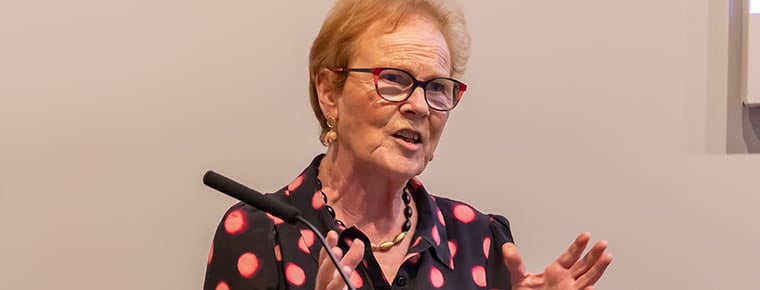
However, the significance of the proposal extended beyond age limits, Noeline Blackwell, (online safety co-ordinator, Children’s Rights Alliance), told the conference.
Blackwell said that protecting young people online could not ultimately depend on asking children and parents to navigate unsafe systems themselves.
The former director of the Irish Council for Civil Liberties also argued that children should not simply be removed from the digital environment in response to the risks it presented.
Instead, responsibility should increasingly rest with the companies designing and providing digital services.
“The harm is being done by the companies, and they should be paying the price,” Blackwell said.
She also recommended that “companies should pre-certify”.
“We should know an awful lot more about what we're looking at,” Blackwell added.
In its digital strategy, the commission has described the KIDS Act as reversing the burden of proof, so that providers will have to demonstrate that services are safe and age-appropriate, rather than regulators having to establish harm after the event.
Blackwell said that this approach was particularly important because children now used a much wider range of digital services than social media alone.
Chatbots
She pointed to gaming and AI chatbots as increasingly important parts of children's lives, and argued that regulation should not become narrowly focused on social-media platforms.
Blackwell identified age assurance as another important issue, arguing that technology companies should be able to establish whether a user was a child without collecting unnecessary information about them.
She noted that the EU was already developing privacy-preserving age-verification technology, designed to allow users to prove their age without disclosing their identity or other personal information.
Blackwell argued against treating privacy and protection as opposing camps.
“If we can manage those rights offline, we can manage them online,” she stated.
Her proposed solutions included effective, privacy-preserving age verification, greater digital literacy, and stronger responsibility for platforms whose services exposed children to foreseeable harm.
Blackwell also highlighted gaps in the existing regulatory framework, including the lack of an independent complaints mechanism for individuals seeking to challenge harmful material on platforms, limited transparency on companies’ risk-assessment methodologies, and difficulties in researching how platforms identified children and assessed risks.
The debate about children's screen time risked obscuring a much more serious problem of exploitation and grooming, Blackwell warned.
“It is extraordinary that we talk so much about screen time online, and there is very little debate … around the fact that child sexual-abuse material is absolutely rampant online,” she said, noting the Internet Watch Foundation finding that 62-63% of global child sexual abuse material (CSAM) was hosted within the EU.
Protocol
Separately, Blackwell also drew attention to the increasing number of issues linked to digital matters in separated families' arrangements, and suggested that practitioners could help parents establish consistent protocols for children's online access.
That might include agreement on parental controls across two households, rules on content and devices, and ensuring that a child cannot simply play one parent off against the other.
- Keep reading Gazette.ie for more coverage of the 2026 Law Society Family and Child Law conference