Pay Directive won’t meet deadline, says minister
Concerns raised by the Law Society’s Employment and Equality Law Committee about the lack of clarity on the transposition of the EU Pay Transparency Directive, and the difficulties for Ireland in its transposition into Irish law, have been tabled as Parliamentary Questions (PQs).
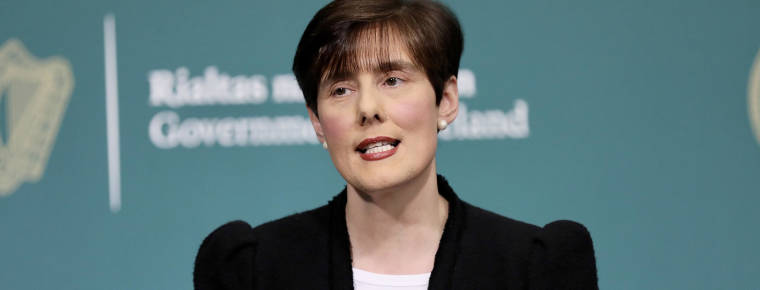
The PQs, submitted by Barry Ward TD (Fine Gael, Dún Laoghaire), were answered by Minister Norma Foley (Department of Children, Disability and Equality) on Tuesday 26 May.
The PQs asked whether the minister was satisfied that Ireland would be in a position to transpose the elements of the Pay Transparency Directive, and if she could set out a timeline for the transposition.
A supplementary question asked the minister whether she was aware of concerns outlined by other EU member states in relation to their ability to transpose certain aspects of the Pay Transparency Directive, specifically in relation to reporting on the gender pay gap, and her views on these difficulties. Did such difficulties also apply to Ireland?
‘Fully committed’
The minister responded that the Government was fully committed to meaningful implementation, with the Gender Pay Gap Information Act 2021 transposing a large portion of the directive, particularly in relation to article 9 on gender pay-gap reporting.
The implementation of the act and associated regulations require employers to report their gender pay gap each year, and the measures that are being taken to eliminate or reduce the gap.
“Work is ongoing at pace to develop the necessary legislation to transpose the remaining provisions of the Pay Transparency Directive as soon as possible, including the obligation for employers to carry out gender-neutral job evaluation and to categorise employees and calculate the gender pay gap in such categories,” the minister commented.
Officials have been working towards the 7 June deadline for implementation, she added.
Transposal delay
However, the EU Commission has been informed that Ireland will not have the directive fully transposed by 7 June.
Minister Foley stated: “Such factors affecting the transposition include the delay in completing a series of EU Commission workshops on the transposition of the directive until late September 2025, and the employer guidance and toolkit, developed by the European Institute for Gender Equality (EIGE) and the European Commission, was not published until the end of March this year.”
A dedicated Irish Employer Gender-neutral Job-evaluation Toolkit, based on the recently published EIGE toolkit, is currently being commissioned by the Department of Children, Disability and Equality, the minister said.
No penalty
Minister Foley clarified that “employers will not be penalised for not having all elements of the directive completed in June 2026”.
At present, employers must calculate and publish information on their gender pay gap by the end of November and, following a small amendment to the Gender Pay Gap Information Act 2021, employers must report that information to the minister through the dedicated Gender Pay Gap Portal for the 2026 Reporting Cycle. Employers will be invited to attend training workshops based on this adapted toolkit, the minister said.
“The department will work with employers, employees and their representatives to support and enable implementation of the directive, which will be on a phased basis once the passage of the legislation is complete.”
‘Crucial’ directive
Minister Foley added: “The Pay Transparency Directive is crucial to empower workers, and especially women, to enforce their right to equal pay through a set of binding measures on pay transparency.”
The directive is geared, also, towards strengthening the transparency of pay systems, to improving the public’s understanding of the relevant legal concepts, and to enhancing enforcement of the rights and obligations relating to equal pay, she stated.
The financial and economic empowerment of women is a key objective under the National Strategy for Women and Girls 2025-30.
Gender pay gap
“The 2024 gender pay gap in Ireland is estimated at 8.3% – this means that, on average, women are paid 8.3% less per hour than men,” Minister Foley said.
There are many likely reasons for this, including that women’s earning power can be impacted by periods of unpaid leave or part-time work for caring responsibilities, she explained
“Women are also under-represented in higher-paid decision-making roles, and there is evidence that, as prospective employees, women may be less likely than men to negotiate higher starting salaries with prospective employers.”