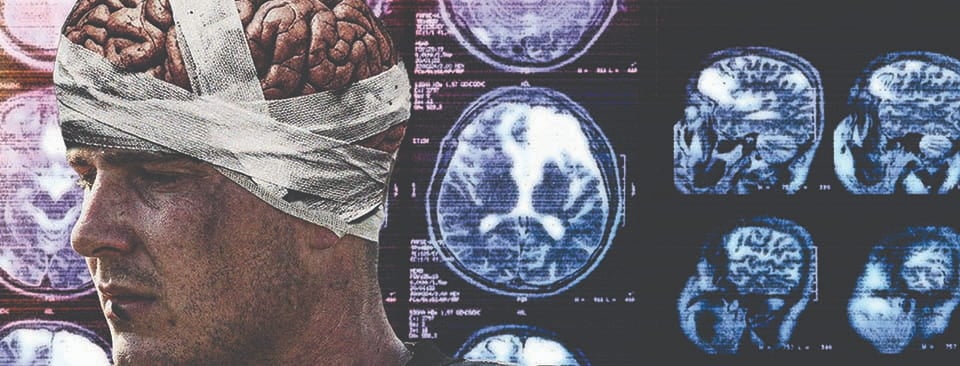
Headbanger's ball
While sports-related concussion proceedings have yet to come before the superior courts in Ireland, US frameworks – now being considered in Britain – will most likely shape the outcome of any Irish ‘test case’. Lorna McAuliffe dons her helmet
Ireland has not yet had a reported High Court or appellate court judgment determining liability for concussion at a sporting-governance level.
That should not be mistaken for an absence of risk.
Proceedings have already been issued in Ireland, and when an Irish ‘test case’ eventually reaches hearing, the outcome is likely to be shaped directly by the legal and medical framework first developed in the United States, and now being considered in Britain.
Modern concussion litigation in sport began with the claims brought by thousands of former football players against the National Football League (NFL). The players alleged that the NFL:
- Knew of the link between repetitive head trauma and long-term neurological disease,
- Failed to warn players of those risks,
- Minimised or delayed acceptance of emerging medical science, and
- Prioritised the commercial interests of the sport over player welfare.
Bang bang
The litigation was consolidated in In re National Football League Players’ Concussion Injury Litigation before the United States District Court, Eastern District of Pennsylvania.
The settlement was ultimately approved by the Third Circuit Court of Appeals in 2016. It is noteworthy that no admission of liability was made by the NFL.
The settlement is uncapped and has since exceeded US$1 billion, establishing a compensation scheme for former players diagnosed with serious neurological conditions, including Alzheimer’s, Parkinson’s, ALS, dementia, and moderate to severe neurocognitive impairment.
The settlement’s uncapped nature means that the NFL has agreed to pay for all validated claims or losses without a pre-set maximum limit on the total amount payable.
All former players with validated claims, retired of the date the settlement received final approval, are eligible to receive compensation.
What made the NFL litigation legally transformative was not only its scale, but the basis on which the players sought to make the NFL liable. However, the settlement does not establish liability on the part of the NFL, or even that the injuries suffered came as a result of playing American football.
The claims were not based on individual tackles or isolated medical decisions – they were based on:
- Organisational knowledge of the medical risk,
- Failure to warn participants,
- Suppression or minimisation of medical evidence,
- Governance responsibility, and
- Systemic risk-management failure.
This was the first time a sporting organisation was exposed to massive financial and reputational liability for failing to respond appropriately to evolving medical science.
It is worth noting similar litigation that failed, in Gee v National Collegiate Athletic Association (NCAA), where it was held that the NCAA did not have a duty to mitigate the inherent risks of American football.
The NHL also resolved concussion litigation against them through settlement, although on a much smaller scale, paying out $18.9 million and avoiding admitting any liability or wrongdoing.
Bang and blame
In Britain, large-scale collective actions have been brought by former professional rugby players against World Rugby, the Rugby Football Union, and the Welsh Rugby Union.
Over 1,100 former players are now involved in litigation, which seeks to make the defendants liable for failing to protect the players from concussion-related brain injury.
They allege that the governing bodies:
- Knew or ought to have known of the risks of concussion and cumulative brain injury,
- Failed to implement adequate protocols,
- Failed to warn players,
- Failed to control return-to-play decisions, and
- Failed to prioritise player welfare.
These claims are framed not as ‘match-day negligence’, but as systemic organisational and governance failures.
Similar claims are now being developed in professional football, where former players allege neurological injury caused by repetitive heading of the ball. There are also claims emerging in boxing and rugby league.
In the group litigation brought by former rugby players, British courts are being asked to decide whether sporting governing bodies owe a direct duty of care to players.
Bang a boomerang
The UK proceedings remain at a pre-trial stage, and no substantive liability judgment has yet been delivered.
The litigation began in 2020 and has been managed as large-scale group proceedings. By mid-2025, more than 1,100 former professional rugby players had joined the claims, making them among the largest personal-injury actions ever brought before the UK courts.
The English High Court has focused heavily on disclosure and evidence management, in particular the production of full medical and neurological records.
In December 2025, the court dismissed an attempt by claimants to resist those disclosure obligations, confirming that comprehensive medical evidence is a prerequisite to advancing the claims.
The next stage is the selection of a limited number of ‘test cases’, which will be used to determine the core issues of duty of care, breach, causation, and foreseeability for the wider cohort.
A full liability trial is not expected to begin until sometime in 2026 – the hearing may extend into 2027.
For sporting organisations, the procedural history of the UK proceedings is instructive. It shows that concussion litigation is document-driven, medically complex, and procedurally demanding.
Big-bang theory
There is one ongoing case of a professional rugby player who has issued High Court proceedings against the IRFU and other bodies.
In these proceedings, the player claims – in a manner similar to the UK proceedings – that the defendants are liable for long-term neurological injuries, which they say were sustained by them as a result of concussion and repeated head trauma.
There is no definitive case law that concussions suffered by sports persons are directly linked to neurological damage, but multiple case studies have been carried out examining the links.
As matters stand, it appears to be an uphill battle for any player to establish the nexus.
While none of the cases have yet been heard, it is clear that neurological injuries can attract significant damages if the plaintiffs can establish a causative link between the injuries sustained and the negligence complained of – provided the players can establish negligence on the part of the governing body and/or the other defendants.
The US and UK litigation show that future Irish claims will not turn on what happened in one match. They will turn on what organisations did over many years.
It is noteworthy that there have been cases that have been unsuccessful, that the NFL litigation was compromised without an admission of liability, and that the UK claims are being vigorously defended.
This is against a backdrop of medical evidence that is not conclusive.
Sporting bodies need to be mindful that they should have their house in order with respect to governance.
The NFL litigation showed how such litigation can give rise to billion-dollar liability.
The claims brought by former players in the UK are, likewise, based on principles of common-law negligence – and it is likely that the Irish courts will be asked to apply those same principles in the claims being brought by former players here.
Concussion is no longer a medical issue when an injury occurs, but rather it is a governance risk that must be managed continuously.
It is essential that sporting bodies have in place protocols to deal with concussion. We will be closely monitoring the outcomes of the litigation in the UK.
Lorna McAuliffe is head of dispute resolution at Whitney Moore in Dublin.
LOOK IT UP
CASES:
- Gee v National Collegiate Athletic Association (Second Appellate District Court of Appeals, 2024)
- In re National Football League Players’ Concussion Injury Litigation (821 F.3d 410; Third Circuit Court of Appeals, 2016)
LITERATURE:
- Alastair Telfer, ‘Rugby concussion lawsuit rises to 1,100 former players’ (BBC Sport, 2 June 2025)
- Andy Bull, ‘Five years on: rugby’s brain-damaged players wait and wait for the help they need‘ (The Guardian, 6 December 2025)
- Elizabeth DiNardo, ‘$18.9 Million Settlement Reached in NHL Concussion MDL‘ (Counsel Financial, 14 November 2018) • NFL Concussion Settlement official website, with programme details and payout statistics, at www.nflconcussionsettlement.com
- ‘The NFL concussion settlement explained’ (Giddens Law Firm, PA)
- ‘Three ex-Irish rugby players to sue IRFU in landmark concussion case’ (RTÉ, 29 September 2022)