EU project to develop AI training for lawyers
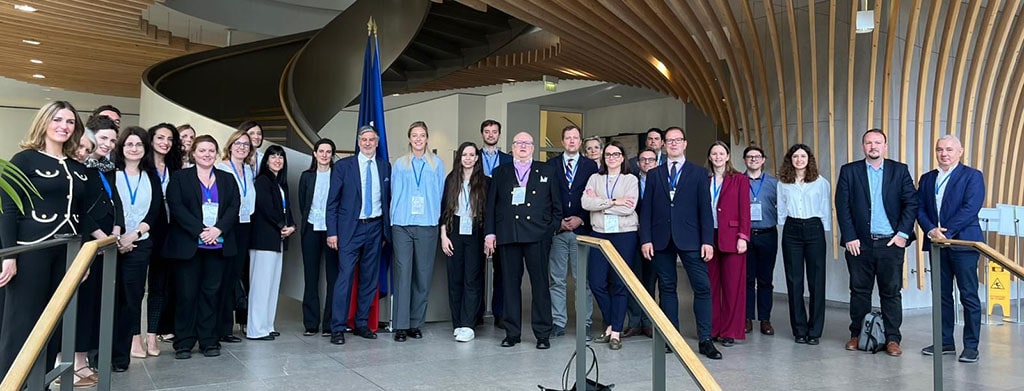
Members of the Law Society Education Department travelled to the Paris Bar School (EFB) in May to launch LITEL 2 (Lawyers Innovative Training on EU Law), an EU-funded project.
Co-ordinated by the EFB, the Law Society, Catalan, Czech, Romanian, and Brussels Bar Associations will work together over the next two years to assess the AI-related training needs of young lawyers and to raise awareness of the impact of AI on the legal profession.
Meeting in Paris for two days, delegates shared their knowledge of and experience with AI.
Through a series of seminars, the delegates discussed the risks and benefits associated with the use of AI by lawyers and outlined the approaches being taken in their jurisdictions to training lawyers on the new technology.
Members of the College of Advocacy of the Inns of Court (London) and the Warsaw, Estonian, and Dutch Bar Associations attended the sessions as observers.
Together, the project partners and their nominated experts will design, produce, and promote an AI toolkit for future and newly qualified lawyers on the impact and appropriate use of AI.
Online programme
In addition to raising awareness on the ethical, appropriate, and responsible use of AI when engaged in legal work, the training materials will focus on how AI interacts with legal frameworks such as the EU Charter on Fundamental Rights and GDPR.
The project partners will work together to create an online training programme for legal trainers on the use of digital tools.
The Law Society delegation included Claire O’Mahony (head of lifelong learning), Sara Van den Bergh, who is co-ordinating the Law Society’s involvement, and Donna O’Leary (solicitor, consultant, and member of the Law Society Technology Committee).
The next gathering for the project takes place in Brussels on 4 and 5 December, and the Law Society says that it looks forward to continuing its work on this “exciting project” and the opportunity to meet and collaborate with fellow European educators of future and newly qualified lawyers.