Safely navigating emotional hazards of practice
Resilience and stress management is one of the pillars of the Law Society’s Professional Wellbeing Project. In order to support our members as they build on their capacity to increase their resilience and promote their professional wellbeing; a new solicitor-led peer support network structure will be launched in the new year.
The Balint method which is recognised internationally as a tool for peer-group supervision for GPs, medical trainees, psychiatrists, psychologists, social workers and a diverse range of professionals has been chosen.
The paradigm of this peer support model is that client meetings are by their nature often deeply personal, provoking strong feelings and emotions that are often complicated, conflicting and sometimes opaque.
Former Law Society President, Council member and chair of the professional wellbeing project steering group, Michael Quinlan said ‘"The pilot programme is important to create awareness that there is help available from one’s peers."
What is the Balint model?
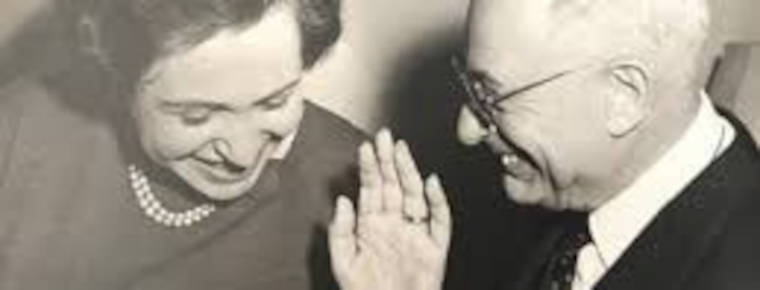
The Balint name comes from Michael and Enid Balint, renowned psychoanalysts who met in 1949 and worked together in the Tavistock Institute of Human Relations. Together, they developed the Balint Group method to help GPs reach a better understanding of the emotional content of the doctor-patient relationship.
The Balint model has been favoured by GPs, and a range of medical and other professionals in Ireland for many years. See Balint.co.uk for more details.
What are the objectives of a Balint Group?
A Balint group offers the opportunity to practice tolerating the extremely difficult and complex feelings that are part and parcel of professional life. Group members can recover their psychological distance and develop a stronger capacity to think clearly in difficult situations.
There are three simple objectives:
- to provide a safe setting to talk about the interpersonal aspects of work with clients;
- to encourage members to appreciate the vulnerability of their clients, even the most difficult;
- group members will develop a deeper understanding of their own feelings, and those of their clients, thus making these professional relationships easier to manage.
The Balint group member develops:
- a stronger capacity to think through difficulties before reacting;
- the ability to communicate containment and ‘holding’;
- the capacity to demonstrate leadership through authority rather than relying on skills, reaction and action.
How does it work?
Rather than delay the roll-out of this new support to allow for physical meetings on a regional basis, it will now proceed online, open to participants from across the country. This is a pilot programme at present to assess the demand, the participation and the feedback from participants.
The Law Society itself will have no role in running the group meetings. However, it will offer guidance and assistance at the early stages to get the group set up and operational.
The Balint group ideally meets monthly in a neutral setting, for up to two hours, with eight to twelve participants.
Balint groups usually have two co-leaders, one of whom is trained in group facilitation and psychotherapy. Their role is to convene and facilitate the group, to manage the task and provide psycho-educational support. The leaders ask if someone in the group has a case to present. This is done without notes or preparation, and with no agenda involved.
Details
A case is a matter connected to professional practice that is on the participant’s mind at that moment. It could be an historical matter, or something that occurred that day. Only a few non-identifying details of the case are required for the presentation.
The focus is much more on what is happening to the group member presenting the case, as a result of the working relationship with the clients.
The rest of the group is asked to share whatever feelings that have surfaced for them from the presentation, without reaching for a solution to the problem itself. By encouraging this, a different picture of the case is assembled, based on alternative sets of ideas, imaginative thoughts and speculative storylines.
The presenter’s case concerns and worries have been temporarily handed over to the rest of the group. This gives the presenter a few moments of freedom to feel the relief that comes with a deepening sense of relief and companionship as his/her colleagues mull over the case in a creative and gentle manner.
The discussion proceeds in this free way for about twenty-five minutes. Then the leaders invite the original presenter to rejoin the group for final thoughts, and to share some insights.
What are the intended outcomes?
Balit groups have at least five operating functions:
- less work-related isolation;
- a sense of belonging with one’s peers who also have similar anxieties, fears, doubts and worries;
- a unique form of professional companionship;
- emotional mirroring and the safe exchange of information, and
- helping to avoid professional burnout.
Interested in finding out more?
It is intended that the programme will get underway early in the new year. Practice principals who are interested in participating should email belindamoller@gmail.com (Group Analyst and Organisation Consultant) or sonia@apartmentlaw.ie (Programme Ambassador and Law Firm Principal).
This programme is an initiative of the Law Society Professional Wellbeing project and is funded by Law Society Finuas Skillnet with the support of Skillnet Ireland.