UN rapporteur calls for complete ban on surrogacy
A landmark UN report has proposed a global ban on surrogacy in all its forms.
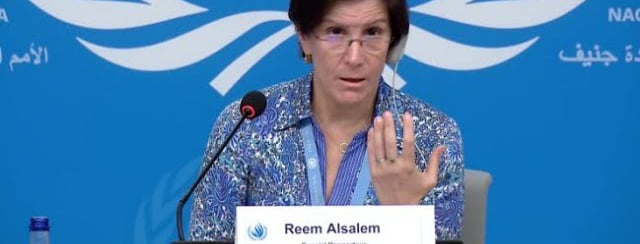
The report, A/80/158, by Reem Alsalem (pictured), UN Special Rapporteur on violence against women and girls, declares that surrogacy is a system of violence, exploitation, and abuse that must be globally abolished.
Violations of human rights
“The consequences of surrogacy are so grave and harmful and result in large-scale violations of the human rights of surrogate mothers and their children that surrogacy as a practice as an industry must be abolished,” Asalem has stated.
Surrogate mothers and girls experienced economic, psychological, physical, and reproductive violence, she added.
Speaking before the European Parliament's Subcommittee on Human Rights over the summer, Asalem said that the EU had consistently demonstrated leadership in advancing human dignity, equality, and the rule of law.
“Throughout its history, this parliament has often been among the first institutions to recognise new and emerging human-rights challenges."
Defining human-rights challenge
“Surrogacy, I believe, presents one of those defining challenges,” she said.
The report attempted to answer whether surrogacy, as practised today, was compatible with states' obligations under international human-rights law towards women and children, she stated.
“This report therefore seeks to fill an important gap in the international human-rights framework,” she added.
“Human-rights law cannot evaluate a practice on the basis of presumed intentions; it evaluates the practice itself,” the rapporteur told the EU sub-committee.
Human-rights law also asked broader questions of who exercised power and with what end, she added.
The revised EU Anti-Trafficking Directive explicitly recognised the exploitation of surrogacy as a form of trafficking, the rapporteur pointed out.
While a fast-growing global industry involving women and children, surrogacy remained one of the least examined practices from the perspective of international human-rights law, the rapporteur said.
While markets were efficient at responding to demand, surrogate mothers often received only between 10% and 27% of total sums paid, the UN official added.
In 2023 alone, the global surrogacy market was valued at almost $15 billion.
In 2025, it was estimated to amount to $27.9 billion and is expected to grow to $201.8 billion in 2034.
The report states that the distinction between commercial and so-called altruistic surrogacy is frequently blurred in practice, and reimbursements often amount to remuneration.
Human-rights law existed to determine which forms of demand society should never satisfy through the bodies of other human beings, the UN Special Rapporteur told the sub-committee.
Slavery
In many situations, surrogate mothers experienced life-threatening situations, and were trapped in situations of slavery and were also subjected to practices that can amounted to torture and inhuman and degrading treatment, Asalem said.
She described the practice of surrogacy as reducing women and children to commercial commodities while stripping women of their fundamental equality and dignity.
The report notes that surrogacy predominantly preys on women from impoverished and marginalised backgrounds, often in conflict zones, who view it as a last resort to provide for their families.
Alsalem argued that the concept of ‘consent’ was misused in surrogacy legal contracts to justify exploitation.
Power imbalance
Informed consent cannot exist under “stark power imbalances” between affluent commissioning parents/agencies and vulnerable surrogate mothers, the report adds.
The power imbalance can lead to women being pressured to waive the confidentiality of medical procedures, submit to interventions that endanger their health, or terminate pregnancies when ‘commissioning’ parents demand it.
Surrogacy also reinforces sexist stereotypes, reflected in the derogatory terms often used to describe surrogate mothers, such as ‘gestator’, ‘oven’, or ‘womb for rent’, the report states.
Surrogacy entails the direct and exploitative use of a woman’s bodily functions, and commercial arrangements place a monetary value on a woman’s capacity to bear and give birth to healthy children, it adds.
Biological trauma
The report highlights that immediate forced separation from the birth mother causes deep emotional, psychological, and biological trauma to newborns, alongside risks of statelessness and a lack of safeguards.
Such children may face long-term identity struggles, which are intensified if they are conceived through gamete donation.
Studies also indicate that they have higher rates of pre-term birth and higher rates of low birth weight.
Moreover, very few, if any, background checks are carried out on ‘commissioning’ parents, with the primary requirement being their ability to pay for the procedure, the report points out.
Risk of sexual exploitation
This poses additional risks for children, including the risk of sexual exploitation.
Legalising or regulating surrogacy does not protect women or curb abuse but normalises demand and commercialisation, the report adds.
The report urges states to take active steps toward eradicating surrogacy in all its forms.
It also calls for the creation of an international legally binding instrument or treaty to universally prohibit surrogacy.
The report also cautions countries against rushing into legislative "quick fixes" or expansions of surrogacy laws without considering the human rights of women and children.
In Ireland, the Health (Assisted Human Reproduction) Act will legalise, regulate, and protect domestic surrogacy pathways.
While the legislation was enacted in July 2024, its principal surrogacy pathways remain uncommenced and are not yet fully operational.