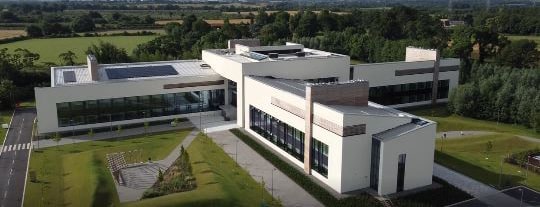
Forensic reports up as lab move completed
Forensic Science Ireland (FSI) has reported a 29% increase in the number of reports it issued last year, as it completed the first full year of operation at its new Backweston laboratory.
FSI provides a scientific service to the criminal-justice system by analysing samples from crime scenes, and providing expert evidence in criminal trials.
Its annual report shows that it issued 23,126 forensic reports in 2025, compared with 17,980 in 2024.
Complexity
The 25,068 cases submitted to the FSI by gardaí and other agencies was in line with figures from the previous two years.
FSI says, however, that the numbers alone do not reflect the range and complexity of investigations reported.
“The number and scale of drug seizures reported has changed; the range of new psychoactive substances has expanded and how those drugs are presented continues to evolve,” the report states, describing the drug marketplace as a “volatile and rapidly changing environment”.
New substance
In 2025, FSI detected and notified the Irish and European authorities of ten instances of new substances or unusual presentations of drugs on the Irish market.
In the case of Hexahydrocannabinol-C8 (HHC-C8), a semi-synthetic cannabinoid detected in a brown resinous substance, the FSI’s report was the first time the substance was found in Europe.
FSI adds that the high number of cases involving submissions of large, high-value importation drugs are “particularly demanding” on its resources and on those of the criminal-justice sector.
The report shows that FSI reported on 45 suspicious-death investigations in 2025.
DNA profiling
DNA profiling was used in 148 body-identification cases involving 154 deceased persons. The FSI laboratory also contributed to 29 missing-persons cases.
The report shows that 7,587 profiles were added to the national DNA database last year.
Writing in the report, director general Dr Ciarán Seoighe said that continuing investment in DNA technologies had allowed it to help identify five missing persons last year.
He also said that 15 new staff had joined the institute during 2025, helping to address some of the gaps in its capacity.