Local authorities’ ‘unjust’ housing approach
A report released by Mercy Law Resource Centre (MLRC), supported by the Irish Human Rights and Equality Commission (IHREC), is calling for stronger legal protections and access to justice for people experiencing homelessness or trying to access social housing.
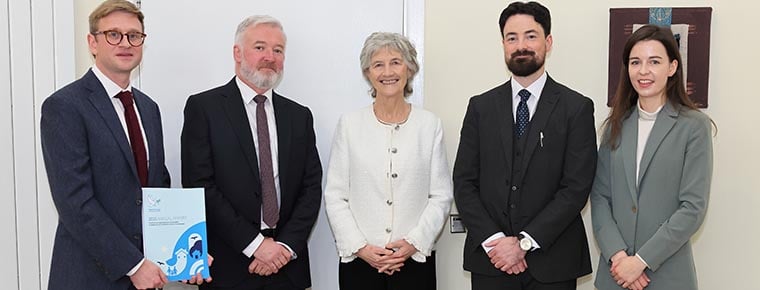
Entitled ‘Human Rights and the Public Sector Duty in Access to Housing and Homeless Services’, it was launched along with MLRC’s 2025 annual report by President of Ireland Catherine Connolly at the Wisdom Centre, Sophia Housing in Dublin 8 (18 November).
The report was supported by the Irish Human Rights and Equality Commission (IHREC).
MLRC’s annual report shows a 23% increase in people contacting its service after experiencing difficulties or unfair treatment when seeking emergency accommodation.
During 2025, MLRC assisted 589 people through its legal-information triage service and provided direct legal advice to 246 clients.
‘Continued failure’ of local authorities
In his address at the event, Edward Gleeson (chair of the MLRC board) remarked on “the continued failure of local authorities to discharge in a lawful manner their public administrative duties towards people in search of shelter” during 2025.
“The biggest increase in our workload came from the unfairness people experienced when they were initially refused recognition of their entitlement to be considered for emergency accommodation,” he noted.
“In addition, we represented people whose harm experienced through domestic violence was exacerbated by unjust administrative approaches by local authorities, which failed to comprehend the complexity of needs and measures that are necessary to safeguard against the recurrence of domestic violence.”
The use by local authorities of “a so-called protocol” for homeless presentations as a basis for decision-making had led to unjust decisions and the need for legal challenges to bring about their reversal, he added.
“A recurrent theme in our work is local authorities' failure to provide adequate reasons for their decisions. In some instances, local authorities failed to even record that they had rejected applications for housing support.”
Public-sector duty
The new MLRC report hinges on the Public Sector Equality and Human Rights Duty, a statutory obligation introduced by section 42 of the Irish Human Rights and Equality Commission Act 2014.
This is the latest in a series of reports, produced by MLRC with the support of IHREC over recent years, that examine the public-sector duty and how it relates to social housing and homelessness.
“Today's report, I think, takes that body of work a step further,” said Liam Herrick, IHREC chief commissioner, in his address at the event.
“It examines the legal framework governing homelessness and access to housing in Ireland, and the operation of the public sector duty – crucially, the potential for that duty to become a more meaningful instrument of change.”
'Significant' progress
There has been significant progress in recent years in terms of awareness of the duty across the public sector, according to Herrick.
“However, the report is saying that greater attention must be given to section 42(1), which is to mainstream obligations to have regard to human rights in day-to-day performance; that it can't be parked in a strategy document at the start of the year,” he explained.
In Herrick’s view, this report addresses an issue that goes to the heart of human rights and equality in Ireland: how people experience homelessness, how those accessing social housing are treated by our public services, and how the law can help to ensure that their rights are respected, protected, and vindicated.
'Not just bricks and mortar'
“It allows all of us who have a stake in this issue to now advocate on the basis of this report with local authorities, with Tusla, with Government, on behalf of those who have lived the experience of homelessness and are facing this basic denial of human rights,” he said.
“Housing is not simply a matter of bricks and mortar. It’s fundamental to human dignity, security, family life and personal autonomy. In IHREC, we often refer to housing as a gateway right. When it’s respected, it compounds other rights and enriches participation in society.”
A particular concern for IHREC is how access to safe housing for people fleeing domestic violence can be essential to protecting their very life and securing their freedom.
“This is a matter in which we have been involved in significant legal cases over recent years,” said Herrick.
“I think this particular report is especially valuable because it examines how existing legal obligations can be used more effectively to improve the way public services respond to those difficulties.”
Supreme Court decision
The report engages with how existing law on homelessness and housing interacts with the public sector duty, and considers, in particular, the Housing Act 1988.
Herrick highlighted the significance of the 2024 Supreme Court decision in O’Donnell and Others vs South Dublin County Council, which is among the many cases examined in the report. One applicant, Ellen O’Donnell, was a wheelchair-using, disabled Traveller child who was left in an overcrowded mobile home for years.
“That case illustrates how interpretation of existing statutory protections must be informed, and demonstrates that, in some circumstances, the statutory powers that are available to housing authorities may lead to mandatory obligations where fundamental constitutional rights are at stake,” Herrick said.
“All of this excellent analysis will empower and equip lawyers to take cases. But we have to have those lawyers in place to be in a position to do that. Questions of access to justice and resources are challenging in this area, and there are wider issues about civil legal aid, which of course also need to be borne in mind,” he concluded.