EU to revamp rules for online-shopping era
The European Commission has presented a proposal for legislation to strengthen protections for consumers online.
It has also put forward a plan to amend existing rules to give it greater powers to investigate large-scale cases that have a significant impact on consumers across the EU.
The EU body estimates that the measures will save consumers across the union up to €13.7 billion a year.
The commission says that, together, the initiatives will build on the existing digital rulebook to strengthen consumer protection, contribute to fairer online markets, and create a level playing field for businesses.
Stronger tools
It adds that its proposals will give it stronger tools to tackle unfair online practices, such as manipulative marketing tactics or hidden fees.
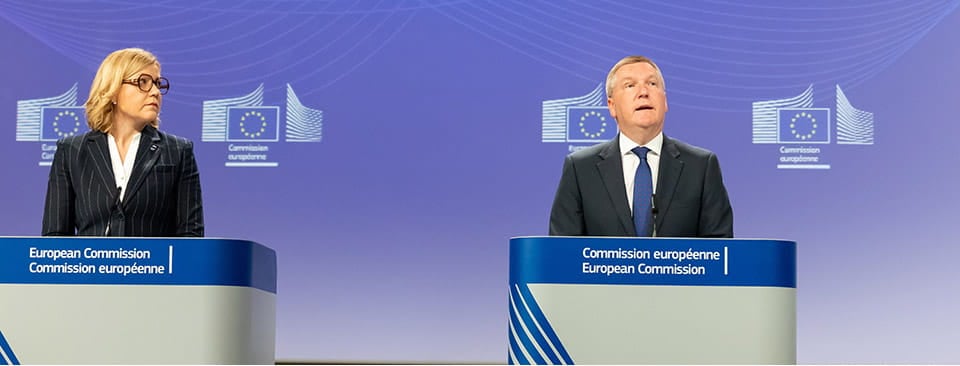
Justice commissioner Michael McGrath described the proposals as “the most ambitious reform of EU consumer-protection rules in a generation”.
“Whether people shop online or in a physical store, they deserve the same high level of protection,” he added.
“This reform will make everyday life simpler, fairer, and safer for consumers, while giving businesses the clarity and confidence they need to thrive,” said technology commissioner Henna Virkkunen.
Ban on ‘dark patterns’
The proposed Digital Fairness Act (DFA) aims to enable EU authorities to tackle unfair practices in digital markets more effectively.
Key measures include:
- A ban on manipulative marketing tactics (so-called ‘dark patterns’), such as fake claims that a product is almost sold out,
- Clear and transparent pricing, particularly prices of purchases made with virtual in-app currencies and when dynamic pricing is used for cultural and sports events,
- Fairness by design, with the option for consumers to turn off addictive design features that encourage excessive or compulsive spending, such as persistent prompts,
- “Clear disclosure” of influencer marketing, requiring influencers to be transparent about commercial content and preventing the exploitation of the trust of minors in their audience,
- A restriction on unfair personalised ads and prices that target minors or take advantage of sensitive data, and
- Digital contracts and subscriptions that are easier to cancel and an end to unwanted automatic renewals and free trials turning into ‘subscription traps’.
In addition, the commission plans revisions to the Consumer Protection Cooperation Regulation that will give it direct powers to investigate large-scale cases with a major impact on consumers across the EU’s single market, with potential fines of up to 6% of a company's worldwide annual turnover.
Cross-border co-ordination
The changes to the regulation also aim to speed up and improve co-ordination of national consumer authorities in cross-border cases, setting timelines for key steps and improving how penalties are co-ordinated.
Non-EU companies will also have to appoint a legal representative in the EU to co-operate with national authorities and the commission.
The proposals will now be discussed by the European Parliament and EU Council.
Some lawyers had previously expressed concerns that the DFA proposals could partly duplicate existing legislation.