KC facing contempt proceedings can appeal
A barrister who faced contempt proceedings in England over a closing speech that he delivered to a jury has been granted permission to appeal.
Rajiv Menon KC was accused of misleading the jury and ignoring the judge’s directions during his address at a trial Woolwich Crown Court in January.
The trial involved pro-Palestine activists causing criminal damage to weapons and other property at a factory in Filton, Bristol, belonging to Elbit Systems, Israel’s largest arms manufacturer.
Summons
According to a report in the England-and-Wales Gazette, Woolwich Crown court decided of its own motion to proceed against Menon and referred the matter to a Divisional Court.
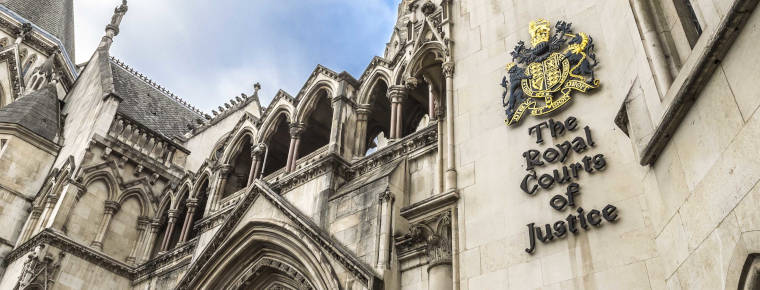
Later, Lord Justice Edis issued an order of the Administrative Court ordering that the matter be listed for a directions hearing at the Royal Courts of Justice, where the contempt allegations were to be considered. Following that hearing, the court directed that a summons be drawn up.
Menon applied to appeal the Administrative Court order under six grounds, including that the court erred in law and had engaged in a serious procedural irregularity in assuming it had jurisdiction to hear and consider an allegation of contempt.
No ‘direct route’
Judges at the Court of Appeal said today (12 May) that ‘a superior court of record had the power to deal summarily with contempt in the face of the court.
They added that any court could refer a case of contempt in the face of the court to the attorney general.
The ruling added, however, that the “overwhelming weight of authority” indicated that there was no “direct route” by which a Crown court judge could refer an incident of alleged contempt in the face of the court directly to the High Court.
The judges granted Menon permission to appeal, set aside Lord Justice Edis’s directions, and granted a declaration that the Administrative Court and/or the Divisional Court had no jurisdiction, in the absence of an application by the attorney general, to consider the allegation of contempt against Menon.
The Gazette quoted his solicitor Jenny Wiltshire as saying: “This unprecedented attempt to criminalise lawyers for doing their job and representing their clients fearlessly should never be repeated.”
Garden Court Chambers, where Menon was a silk, had described the proceedings as “wholly novel and without historical precedent”.