€400,000 defamation awards an ‘outlier’ – RDJ
RDJ partner Darryl Broderick has said that a recent large defamation award to two human-rights solicitors based in the North may turn out to be an “outlier”.
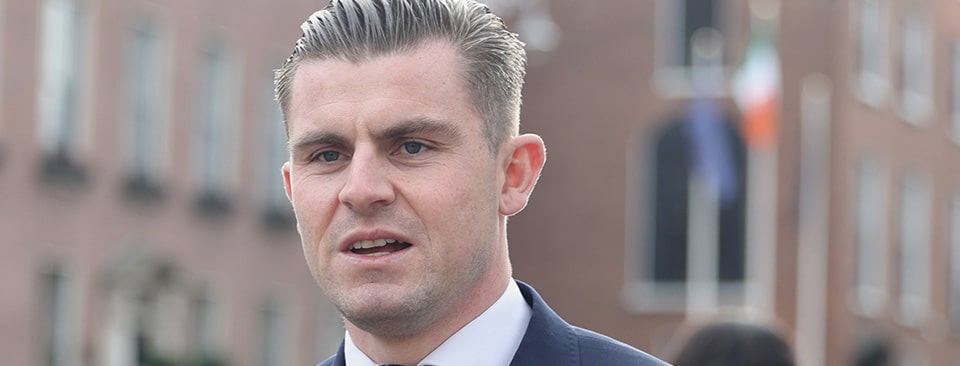
Darragh Mackin (pictured) and Gavin Booth were last week awarded more than €400,000 each in the High Court after a jury found that they had been defamed by a press release issued in 2016 on behalf of businessman Denis O'Brien by his PR spokesman James Morrissey.
In an analysis on the RDJ website, Broderick described the award as one of the highest defamation awards ever made in Ireland.
“It is also noteworthy for being the highest defamation award since the Supreme Court set out guidelines for appropriate damages in defamation cases in 2022,” he added.
Press release
The press release at the centre of the case was in response to a report on the concentration of media ownership in Ireland, which was commissioned by then Sinn Fein MEP Lynn Boylan. Mackin and Booth were the co-authors of the report.
The offending words in the statement were “Sinn Féin/IRA certainly got the report they paid for”.
Mackin and Booth claimed that the press release meant that they were in the pay of the IRA, which was defamatory of them.
Broderick noted that, ultimately, the jury determined that the offending words meant that Mackin and Booth had acted for an unlawful organisation, namely the IRA.
It awarded each plaintiff €270,000 in general damages and almost €142,000 in aggravated damages.
Aggravated damages are awarded to plaintiffs where the defendant's conduct has worsened the injury caused to the plaintiff.
Status
Broderick listed several factors that indicated that an award of this size was unusual and “unlikely to be regularly repeated” – including the fact that the two plaintiffs were human-rights lawyers based in the North who, on their own evidence, had advised parties from both communities.
Evidence was given that alleged association with a particular unlawful organisation in the North had resulted in lawyers being murdered in the past, the RDJ lawyer noted.
He also said that the jury “would have been well aware of Mr O'Brien's status as a billionaire and his perceived ability to fund a sizeable damages award”.
Broderick also pointed out that most defamation claims were brought against the media in relation to publications or broadcasts, and cases linked to press releases were “quite rare”.
“The publishers of a press release would not have the same protections available to the media in defending a defamation claim,” he stated.
Juries
Broderick said that the award against O’Brien and Morrisey had led to further calls for the abolition of juries, which forms part of the Defamation Bill currently before the Oireachtas.
“The abolition of juries will at least lead to a situation where we should have some explanation for how an award was arrived at,” he said.
“As with many jury awards in defamation cases, it is hard to know where this award leaves the general landscape of damages awards in defamation cases.
“In being the highest award in a defamation case in many years, it does appear to be an outlier,” the RDJ lawyer said, pointing out that most defamation cases settled for sums that were within the €75,000 monetary jurisdiction of the Circuit Court.