Judges make wellbeing a professional priority
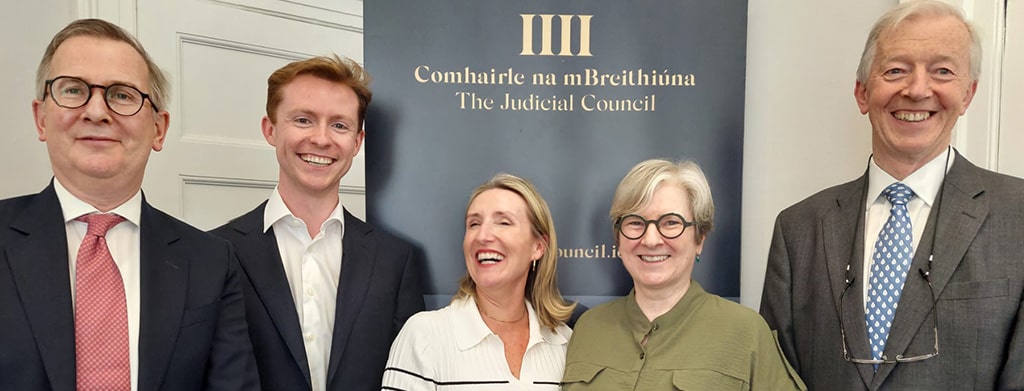
In what may prove to be a quietly transformative moment for the Irish legal system, 15 members of the judiciary gathered on Friday 11 April for a first-of-its-kind strategy workshop to shape the future of judicial wellbeing.
Chaired by Ms Justice Aileen Donnelly of the Supreme Court, who is also chair of the Judicial Council’s Wellbeing Committee, the event was hosted in partnership with Law Society Psychological Services, as part of its Well Within the Law initiative.
The workshop marks a significant evolution in how the justice system approaches the psychological sustainability of its community – placing wellbeing not as a private concern, but as a professional priority.
Held as a follow-up to a Judicial Council conference in January, at which 120 judges explored the role of wellbeing, this workshop focused on moving from insight to implementation – translating known challenges into practical, systemic solutions.
‘Vital role’ of wellbeing
“We are delighted that we have been able to call upon the expertise of Law Society Psychological Services as the Irish judiciary, like judiciaries all around the world, explores the individual and collective responsibilities of judges in promoting judicial wellbeing,” said Ms Justice Donnelly.
“It is recognised internationally that judicial wellbeing plays a vital role in upholding judicial integrity and effectiveness,” she added.
Across the three-hour session, participants explored four strategic pillars for long-term wellbeing:
- Individual psychological health,
- Peer and team support,
- Structural reform, and
- Societal and cultural change.
Structural issue
The conversation explored topics that are increasingly examined as part of the wider legal culture: burnout, stress, and the inevitable toll of challenging and complex casework.
Antoinette Moriarty (head of Law Society Psychological Services) said that the group emphasised the value of supporting wellbeing – not just at the individual level, but also across the entire community of judges.
“Reframing wellbeing as a structural issue requires organisational and cultural change – and yet it is what optimises performance and contributes to the integrity and effectiveness of our valued and valuable judiciary,” Moriarty observed.
Peer discussion
Guided by principles drawn from systemic thinking and the psychological sciences, the session invited open reflection, peer discussion, and the design of practical action.
Participants engaged with case studies, contributed to thinking about a draft wellbeing strategy, and helped identify tangible interventions that could be applied across all of the courts.
“What stood out was the depth of insight in the room. Judges know this system intimately," said Dale Whelehan (senior executive, Law Society Psychological Services).
"They’re not asking for perfection, but for practical, psychologically informed conditions that allow them to deliver justice without sacrificing their own wellbeing.”
The judiciary, with the assistance of Law Society Psychological Services, will use the insights gained to develop and guide support for judges in this area.
‘No longer a fringe concern’
According to Law Society Psychological Services, the message emerging from this workshop is unambiguous: wellbeing is no longer a fringe concern – it is foundational.
A sustainable, high-functioning justice system depends not only on legal rigour, but on the psychological vitality of those who uphold it.
Change begins with the committed and hard-working humans who carry the weight of justice every day – including the judiciary, who, at the pinnacle of the pyramid, can lead all those working in the justice system towards a healthier and high-performing legal culture.
If any legal organisations are interested in exploring wellbeing and cultural change with Law Society Psychological Services, learn more online or email a.moriarty@lawsociety.ie.