Disability tops list of equality concerns for the IHREC
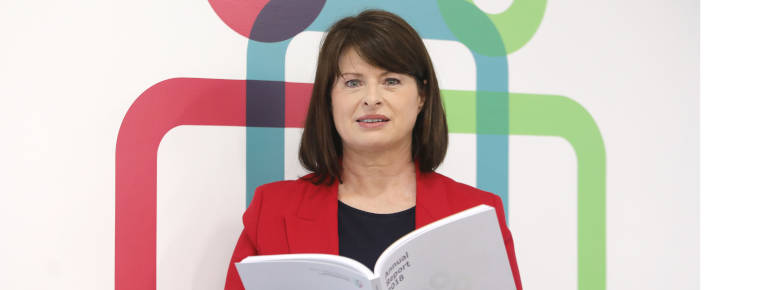
The Irish Human Rights and Equality Commission (IHREC) has launched its annual report 2018 to the Houses of the Oireachtas. The report indicates a significant increase in activity for the IHREC during its fourth full year of work as Ireland’s national human rights and equality body, which is directly accountable to the Oireachtas.
There were significant legal interventions across direct provision, disability rights and housing. Disability discrimination remains the highest area, being almost one-third of all equality related concerns. A total of 1,711 public concerns in relation to discrimination were handled by the commission last year.
Housing focus
- The top three public concerns related to the Equal Status Acts, focusing on discrimination on the grounds of disability (33%), housing assistance (22%), and race (15%).
- The top three public concerns under the Employment Equality Acts related to discrimination in employment and job-seeking on the grounds of disability (30%), gender (25%) and the race ground (16%).
Housing will be a key focus for the IHREC over the next three years, in line with its three-year strategy for 2019-2021. Other highlights in the report include the fact that a Disability Advisory Committee has been set up to monitor Ireland’s obligations under UN Treaty. The committee of 11 comprises a large majority of people with disabilities. Also, the IHREC has secured chair of the European Network of National Human Rights Institutions, which has 44 members from across the Council of Europe.
In launching the report, chief commissioner Emily Logan highlighted the issue of housing, and the increased level and types of discrimination being experienced in Ireland. She said:
“The crises in direct provision and in housing lay bare just how much further we have to go to eliminate discrimination and violations of human rights in Ireland. They also show how much our State remains wedded to approaches that we know from experience simply do not work.”
Legal activity
Commenting on the commission’s significant legal activity, she said: “Our engagement with the courts is a crucial means by which we can ensure that the human rights and equality consideration of legal cases are clearly articulated and brought to bear on court deliberations. We took on new applications for legal assistance across multiple grounds, including age discrimination, disability, family status, housing assistance, and membership of the Traveller Community.”
As amicus curiae (friend of the court), the IHREC sought liberty to intervene in seven new sets of proceedings in 2018, across a range of human rights and equality questions. The commission was granted liberty in all of them.
Legislation indefinitely barring people in direct provision from working was struck down as unconstitutional, prompting the Government’s adoption of EU legislation in this area (the NHV case).
In relation to reasonable accommodation for people with disabilities – the case of Marie Daly, a special needs assistant at the Nano Nagle School, has gone before the Supreme Court. Ms Daly suffered an accident and, after rehabilitation, sought to return to work but was refused.
Key Court of Appeal rulings on the circumstances under which people can be detained in care settings dealt with challenges to current practice and legislation in favour of personal choice and people’s right to liberty (the L case and the AB case).
Acting in the Court of Justice of the EU (CJEU), the IHREC was represented in Luxembourg in a case brought before the court on a question of age discrimination related to entry to the Gardaí, which looked specifically at the authority of tribunals to disapply national law where inconsistent with EU law.
Legal representation grew by 40%
Grants of legal advice or legal representation in new cases grew by 40% from the previous year. Successful outcomes in legal representation cases during 2018 included:
- A tenant successful in their challenge of their landlord in discrimination relation to the Housing Assistance Payment (HAP),
- A settlement for a family refused the opportunity to rent a property by an estate agent because they had children,
- A case brought before the Court of Justice of the European Union (CJEU) on a question of age discrimination related to entry to the Gardaí, which looked specifically at the authority of tribunals to disapply national law where inconsistent with EU law,
A settlement secured for a deaf man whose job interview offer was withdrawn when he sought the provision of an ISL interpreter.
Equality reviews
In the first use of statutory powers under section 32 of its founding legislation, the IHREC invited six bodies to undertake equality reviews on specific aspects of their services.
The Commission brought forward four new pieces of statistical research with the ESRI to provide a clear evidential base to ground the development of equality and human rights policy on:
- Attitudes to diversity in Ireland,
- Discrimination and inequality in housing in Ireland,
- Disability and discrimination in Ireland, and
- Ethnicity and nationality in the labour market.
The IHREC also shone a spotlight on online hate speech in an Irish context. Significant new research from DCU was published in conjunction with the Irish Research Council (IRC).
Brexit fears
The IHREC has worked jointly with the Northern Ireland Human Rights Commission on Brexit, as the Joint Committee under the Good Friday Agreement saw direct engagement in Brussels, London, Belfast and Dublin. Their work focused on the human rights and equality impacts of Britain’s withdrawal, and on the Common Travel Area.
The Joint Committee has outlined to the EU Chief Brexit Negotiator Michel Barnier, and the British and Irish Governments, the clear need that people living in Northern Ireland should suffer no diminution of rights due to Britain’s withdrawal from the EU.