Migration ‘a global inequality crisis’ – Hayden
In her opening remarks to the AGM of the Irish Women Lawyers Association (23 July), chair Rosemarie Hayden reflected on a year in which issues including violence against women, access to justice, and gender equality had remained at the forefront of legal and societal debate.
Referring to the Government’s approval to publish ‘Jennie’s Law’ (Domestic Violence Judgments Register Bill 2026), the continuing challenges surrounding domestic and sexual violence, and the importance of ensuring confidence in the justice system, Hayden said that lawyers had a particular responsibility to ensure that the legal system worked “not only for practitioners, but for litigants, clients, and citizens”.
She also highlighted the continuing work of the IWLA in supporting women entering and progressing within the profession, promoting diversity and inclusion, and contributing to public debate on issues where law and women’s lives intersected.
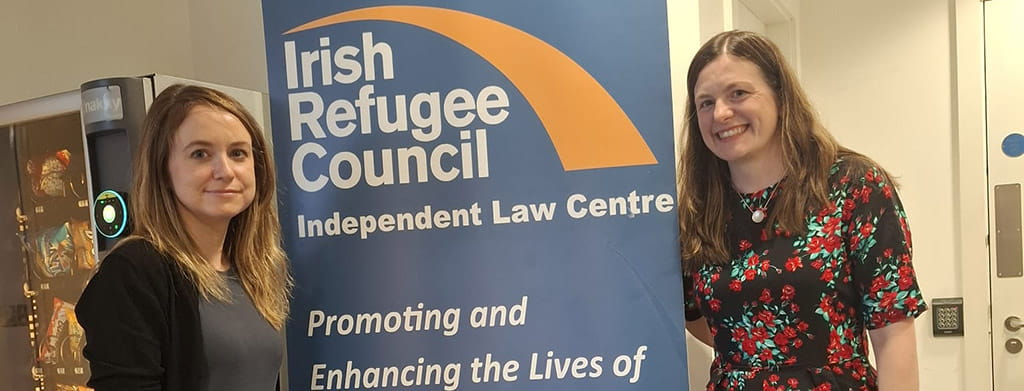
The AGM included a discussion between Katie Mannion, managing solicitor of the Independent Law Centre at the Irish Refugee Council, and Sally Hayden, award-winning journalist, international correspondent with The Irish Times, author, and adjunct professor at the UCD Sutherland School of Law.
Migration routes
Introducing the discussion, Rosemarie Hayden said that the two speakers represented different approaches to a shared commitment to justice and accountability: “One shines a light on injustice through meticulous reporting; the other works tirelessly to vindicate those rights through the law.”
Hayden spoke about her book My Fourth Time, We Drowned, which is based on years of reporting on migration routes – including communication with people held in Libyan detention centres.
It also examines the impact of European migration policies on people attempting to reach safety, including “the EU's complicity in the Libyan Coast Guard intercepting boats” in the Mediterranean and returning people to Libya.
She said that she had hoped that exposing these practices would lead to greater change, but the situation had continued.
However, she also outlined the impact of the reporting in legal contexts – including its use in submissions to the International Criminal Court, litigation concerning Britain’s Rwanda deportation policy, and by lawyers seeking to understand the experiences of clients who had endured detention, abuse, and prolonged uncertainty.
Journey 'can be part of trauma'
Mannion highlighted the importance for lawyers of understanding not only the legal basis of a protection claim, but also the experiences that shaped a person’s journey.
While the assessment of international protection may focus on the country to which a person cannot return, she said that the journey itself could be a significant part of a person’s experience and trauma.
Hayden said that people who had experienced severe trauma may not always be able to explain what had happened to them, either because of the effects of trauma or because they had not fully understood the circumstances in which they found themselves.
She said that reporting and documentation could assist lawyers and other professionals in understanding the background to an individual’s experience.
Family reunification changes
Family reunification was another central theme of the discussion, particularly in the context of the June commencement of the International Protection Act 2026 and the EU Migration and Asylum Pact.
Mannion said that family reunification was central to allowing recognised refugees to rebuild family life after displacement.
She expressed concern about changes introduced under the new framework, which she said would make applications more difficult.
These include the introduction of a two-year waiting period before an application can be made and financial requirements for sponsors.
She said that this represented a significant change, as family reunification had previously operated without financial conditions and added: “The other problem with family reunification is now unaccompanied minors will be able to apply for their parents, but not their minor siblings”.
Referring to the relatively small numbers arriving through family reunification routes (669 in 2025), Mannion said that the consequences of the changes would nevertheless be significant for those affected, particularly where families remained separated in countries experiencing conflict or instability.
High numbers of men applying
The speakers also addressed the frequently debated issue of the high numbers of men applying for international protection. Mannion explained that this often reflected the decisions families were forced to make where journeys were dangerous and expensive.
In many cases, she said, one family member – often an older child – travelled first because the journey was considered too dangerous or costly for the whole family.
The intention was frequently that, once safety and legal status had been secured, other family members could join them through family reunification.
Hayden said this reality was often overlooked, with men sometimes portrayed as having abandoned their families. She recalled speaking to men who were deeply affected by prolonged separation from their children and partners – including one man who said he wanted his children to know who he was and remember him.
Framing 'messed up'
Both speakers returned throughout the evening to the importance of recognising the human relationships behind legal categories.
Hayden said that her new book This is Also a Love Story: Searching for Good in a Divided World explored the relationships, communities, and acts of care that existed alongside conflict, displacement and crisis.
Sally Hayden discussed the language and framing of migration. “I do think that the framing is all quite messed up. Actually, what we have is a global inequality crisis where some portions of the world have just completely different rights to others – rights and opportunities and abilities. That can really get lost in the framing and a lot of the language is very dehumanising.”
She questioned distinctions often drawn between terms such as “expat” and “migrant”, suggesting that the way people were described could influence both how their experiences were understood and beliefs about integration.
The discussion also highlighted the connection between legal processes and the individual experiences behind them. Both speakers emphasised the importance of evidence, accountability, and an understanding of the circumstances that brought people before the legal system.