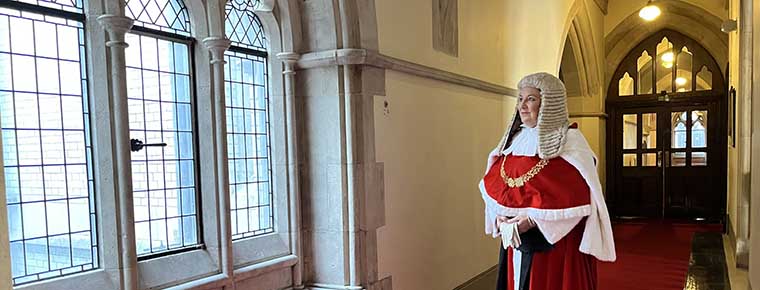
Critical comments ‘shatter lives’ of judges – Carr
Britain’s Lady Chief Justice has said that some of her judges have been doorstepped and received death threats as a result of “inaccurate reporting” on their rulings.
Appearing before the House of Lords constitution committee (26 February), Baroness Carr of Walton-on-the-Hill told journalists that she was “deeply troubled” by a recent exchange between Prime Minister Sir Keir Starmer and Tory leader Kemi Badenoch.
'Wrong decision'
During Prime Minister’s Questions about a Gazan family that was allegedly allowed to enter Britain under a scheme for Ukrainian refugees, the Prime Minister said that a judge had made the wrong decision.
Carr told the committee: “It’s really important to understand that no one has ever suggested, no one is saying there should not be robust and healthy debate both in and outside parliament, including criticism, if necessary, of judgments.
“But the judicial process and judicial independence have to be respected,” she stated.
If judgments were wrong, a person could appeal, Carr added.
If the law was wrong, parliament had the prerogative to change the law, the England-and-Wales Gazette reported.
Debate based on fact – not misconception – was an important part of open justice, Carr said.
Trigger
“However, criticism of a judgment, debating a judgment is one thing. Inaccurate reporting and abuse of a judge who cannot speak out to defend themselves is another.
“The trigger for my concern in the context of the need to respect the judicial process is the dangers that arise out of inaccurate reporting,” she said.
As a result of inaccurate headlines and subsequent publicity, Carr told the committee that judges had been doorstepped and received death threats, and their families were living in fear.
“I welcome reporting and criticism, but what I have always asked for, from day one, is fair, objective and accurate reporting,” Carr added.
“This is not about closing the debate down. The debate should be wide open. It is for the courts to decide whether a judgment is wrong.
“But it is absolutely unacceptable – as I must protect my judges and defend them – that they are exposed to the sort of comments and reporting that shatter their lives.”
‘Head above parapet’
Carr said that she did not enjoy having to stick her head above the parapet on these issues but stressed that she had a duty to defend her judges.
The latest UK Judicial Attitude Survey reveals that four in ten judges now fear for their safety.
The Lady Chief Justice agreed that improving the communication of court rulings to ensure the public understood the reasoning behind them would aid in upholding the importance of the rule of law.
However, the Lady Chief Justice said that judges often lacked the resources or time to create these summaries effectively.
She stressed the need for judges to be able to make decisions without fear of external influence or repercussions.
In the Netherlands, the use of a ‘press judge’ aided in the difficult task of simplifying complex legal decisions while maintaining accuracy, the committee heard.
These are trained to speak to the media, although they typically focus on explaining general principles of law rather than commenting on specific cases.
While judges strive to deliver impartial rulings, the environment they operate in has become more hostile, making the accurate and accessible communication of their decisions even more important.