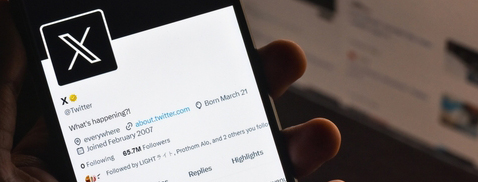
X’s €120 million fine a first under DSA
The European Commission has made its first non-compliance decision under the Digital Services Act (DSA), fining social-media platform X €120 million for breaching transparency obligations under legislation.
The DSA sets out the obligations that major technology companies must meet in the EU.
The commission said that the breaches included the “deceptive design” of its ‘blue checkmark', a lack of transparency of its advertising repository, and a failure to provide access to public data for researchers.
‘No meaningful verification'
On X’s blue checkmarks, the EU body found that anyone could pay to obtain the ‘verified' status without the company meaningfully verifying who was behind the account, making it difficult for users to judge the authenticity of accounts and content with which they engaged.
The commission also said that X's advertisement repository failed to meet the transparency and accessibility requirements of the DSA, with design features and access barriers, such as excessive delays in processing.
According to the EU body, X's ads repository also lacks critical information, such as the content and topic of the advertisement, as well as the legal entity paying for it.
Finally, the commission found that the platform failed to provide researchers with access to the platform's public data and imposed “unnecessary barriers” for researchers, “effectively undermining research into several systemic risks in the European Union”.
‘Shutting out researchers’
The commission has set X, which is owned by Elon Musk, deadlines ranging from 60 to 90 days to set out the measures it will take to end the infringements of the DSA.
“Deceiving users with blue checkmarks, obscuring information on ads, and shutting out researchers have no place online in the EU,” said technology commissioner Henna Virkkunen.
“With the DSA’s first non-compliance decision, we are holding X responsible for undermining users’ rights and evading accountability,” she added.
In a separate announcement, the commission said that another social-media platform, TikTok, had agreed to take measures to address concerns about the transparency of its advertising repositories.