Disorderly Brexit will slash growth to 0.7% in 2020
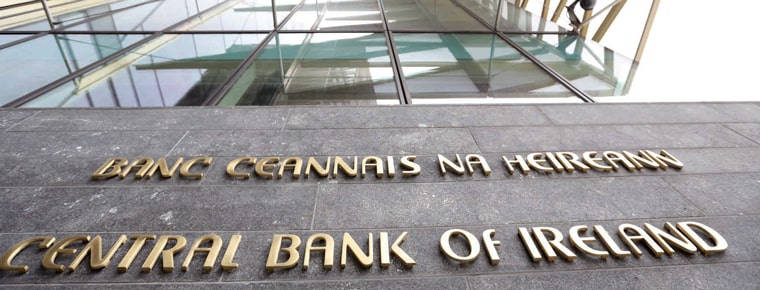
The Central Bank has revised upward its growth prediction for the Irish economy.
Irish economic growth is now expected to be 4.9% in 2019 and 4.1% in 2020.
In the event of a no-deal Brexit, growth will be significantly weaker in 2020, with unemployment higher than it would be if a deal is agreed, the bank says.
And the Central Bank of Ireland Quarterly Bulletin also points to a material risk of overheating if strong economic expansion continues.
If a no-deal Brexit is avoided, there is a material risk that continued strong expansion could give rise to overheating in the economy, the Central Bank believes.
The third Quarterly Bulletin of 2019 reports:
- Economic growth expected to be 4.9% this year, moderating to 4.1% in 2020,
- The unemployment rate is projected to decline from 4.7% in 2019 to 4.5% in 2020,
- Compensation per employee is forecast to increase by 3.6% in 2019 and 4.1% in 2020,
- Inflation is projected to pick up moderately. Current assumptions point to a forecast of 1.0% and 1.2% for 2019 and 2020,
- In the event of a no deal Brexit from end-October 2019, Central Bank estimates suggest that economic growth would be reduced to 0.7% next year, with around 34,000 fewer jobs by the end of 2020 compared with the central forecast.
The Central Bank’s central forecast is that growth in 2019 and 2020 is expected to come primarily from the continued expansion in underlying domestic demand, reflected in solid growth in consumer spending and underlying investment.
The central forecasts are based on a deal on Brexit being reached and a transition period coming into effect until end 2020.
On the domestic side, the recent strength of growth in output and employment have further elevated the cyclical position of the economy, eroding already limited domestic spare capacity, the Central Bank says.
Material risk
If a disorderly no deal Brexit can be avoided, underlying economic activity is expected to perform strongly in 2019 and 2020. Given the already cyclically advanced stage of the economy, there is a material risk that continued strong expansion could give rise to overheating and generate sustained upward wage pressures.
Director of Economics and Statistics, Mark Cassidy said: “In the event that the disruption from a no-deal Brexit is avoided, there is a risk of overheating occurring in the Irish economy given that output is now at or close to full capacity.
“In the event that a no-deal Brexit were to occur, there would be a significant weakening of activity across many parts of the economy. Our current projection is that, in the event of a no-deal Brexit, the economy would expand by 0.7% in 2020, as opposed to 4.1% if a deal can be agreed.
“And our forecast is for around 34,000 fewer jobs by end 2020, and over 100,000 fewer jobs over the medium term compared to our forecast if a deal on Brexit cannot be reached.
Risk of overheating
“The uncertainties around Brexit and managing the risk of overheating increase both the challenge and importance of charting the appropriate fiscal policy path. If a disorderly Brexit can be avoided, the underlying outlook and, in particular, the risk of overheating, emphasises the importance of a more ambitious improvement in the fiscal position.
“With output at or close to potential, a tighter fiscal policy would help to manage demand pressures and reduce the risk of overheating and a return to boom-bust type conditions.
“On the other hand, if a disorderly Brexit were to occur, there would be a material deterioration in the public finances and the fiscal environment would be significantly more challenging.
Targeted support
“In this case, there may be the need to provide targeted support to the parts of the economy that are most affected. However, it is important that any fiscal response is consistent with long-run debt sustainability and does not undo the hard work in re-establishing Ireland’s fiscal credibility and risk the emergence of unsustainable debt dynamics.”